AGVs (Automated Guided Vehicles) are autonomous material handling systems that operate without human intervention, utilizing intelligent systems for path planning and cargo transportation. They have become indispensable in the transition to unmanned production, relying on built-in smart systems (integrating path planning, sensor perception, and AI algorithms) to navigate factory floors and warehouses, accurately handling material transport and distribution tasks.
Core Value:
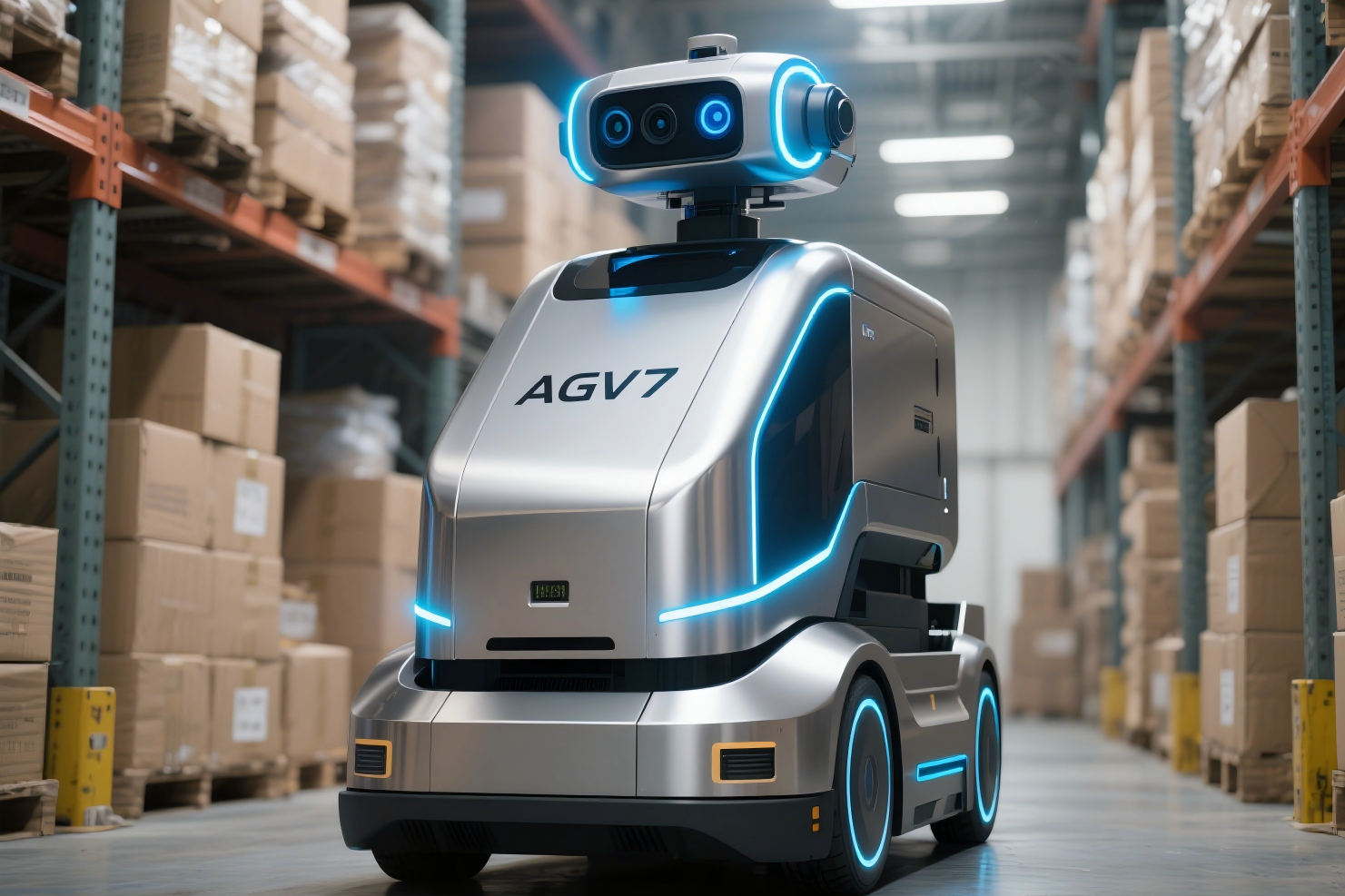
AGVs rely on real-time, accurate data transmission and command interactions with WMS, MES and other automated equipment (e.g., robotic arms, elevators). A stable communication network is critical for coordinating these key nodes. Traditional scenarios face the following challenges:
1️⃣Unstable Communication:
Traditional Wi-Fi networks suffer from signal blind spots and roaming handover delays (>100ms), causing command loss or lag when AGVs move between AP zones. This disrupts real-time status reporting and coordination with other devices, paralyzing the smart system and impacting production.
2️⃣Network Capacity Bottlenecks:
A single AP supports only 20 AGVs concurrently. Exceeding this limit reduces bandwidth by over 50%, making it difficult to meet the demands of large-scale warehouses with hundreds of AGVs.
3️⃣Poor Environmental Adaptability:
Electromagnetic interference (e.g., from VFDs, welding equipment) degrades the Signal-to-Noise Ratio (SNR) in the 2.4GHz band to below 10dB. Traditional solutions require manual frequency adjustments.
3. Industrial Wireless Solution: AP + AC Combo
To address these challenges, the Industrial Wireless AP (Access Point) + AC (Wireless Controller) solution was developed. The AC acts as a commander, centrally managing all APs, while industrial APs function as distributed signal stations. With zero-handoff roaming technology, AGVs always connect to the optimal network node during movement.
✅Zero-Roaming Handoff:
Automatically detects signal sources and switches to stronger APs without delay or data interruption. Eliminates coverage dead zones and ensures continuous command transmission during AGV movement.
✅Strong Anti-Interference Capability:
Industrial-grade hardware (metal housing resistant to high/low temperatures, stable operation in -45°C to 85°C) combined with dedicated frequency bands and anti-interference algorithms ensures stability in complex electromagnetic environments.
✅Comprehensive Coverage:
Supports high-density deployment with advanced gain antennas, extended coverage, stronger penetration, and higher wireless access capacity. AC intelligent scheduling ensures uniform signal coverage throughout the facility, keeping AGVs "online" anywhere.
✅Simple and Flexible Networking:
The AC controller enables one-click configuration, automatic IP allocation, and centralized management. No complex setup required, making it easy for non-professionals to deploy.

① IWP Series Outdoor Wireless APs:
1×10/100/1000M adaptive WAN port (48V PoE support); 1×10/100/1000M adaptive LAN port.
Latest Qualcomm chip, supports 100+ users.
Layer 2/3 roaming with automatic signal switching.
High-power FEM for stable performance and extended coverage.

② IWG Series Wireless AC Controllers:
Manages up to 128 APs (local forwarding).
Zero-configuration and group-based auto-provisioning from AC, user-friendly for beginners.
1×Gigabit WAN port, 1×Gigabit LAN port, 3×configurable WAN/LAN ports with multi-WAN load balancing.
Firewall support with Layer 7, enabling policies based on address, user, level, department, time, destination address, and port.

5. Client Case Study
A large automotive parts factory achieved immediate results after deploying Comark’s industrial wireless products:
95% reduction in AGV communication failures, nearly eliminating emergency stops and task interruptions.
30% improvement in logistics turnover efficiency, significantly reducing production line waiting times.
40% reduction in operational costs, with sharp decreases in network debugging and fault resolution time.
Enhanced production flexibility, enabling easier AGV route adjustments and system expansions.
"Industrial wireless networks are like invisible tracks for AGVs—only stability and smoothness unlock their full value!" — Smart Logistics Director of the enterprise.
Today, the industrial AP + AC solution is becoming a standard for smart factory upgrades, supporting future expansion and the integration of more AGVs and IoT devices, ensuring seamless smart production.
Is your factory ready to make AGVs faster and more stable?


