Ⅰ. Overview of Industrial-Grade Optical Transceivers
Industrial optical transceivers are photoelectric conversion devices for harsh industrial environments. They realize bidirectional conversion between Ethernet electrical and optical signals, overcoming the drawbacks of short transmission distance and weak anti-interference of ordinary network cables. Providing long-distance, stable, low-latency transmission links for industrial control and security monitoring, they serve as core hardware for industrial long-distance networking.
Ⅱ. Comark Industrial Optical Transceiver Introduction
Core Specifications
✅ Transmission Performance: 100M/1000M adaptive; max 120km optical transmission, compatible with single/multi-mode fiber to meet all-distance networking demands.
✅ Environmental Adaptability: Wide temperature range (-40℃ ~ +85℃); IEC61000 Level 4 lightning, anti-static and anti-EMI design to resist high-voltage and converter equipment interference.
✅ Networking Capacity: Models of 1F4E / 2F4E support multi-camera access for flexible networking.
✅ Power Supply: DC 12~48V wide industrial voltage, with reverse connection, overvoltage and overcurrent protection.
Four Core Advantages
1️⃣ Full-scenario Compatibility, Easy Selection
Compatible with mainstream switches and surveillance cameras without extra debugging, lowering project selection difficulty.
2️⃣ Plug-and-Play, Zero Commissioning Threshold
Auto-adaptive photoelectric conversion, rate and links. No professional network configuration required. Construction and maintenance staff can deploy rapidly, fit for mass projects.
3️⃣ Compact, Multi-mount Design for Lightweight Construction
Supports DIN rail, wall and cabinet mounting, suitable for narrow spaces like control cabinets and pole-mounted outdoor boxes. Simple wiring with fewer accessories shortens construction cycles.
4️⃣ 24/7 Stable Operation, Low Maintenance Cost
Industrial reinforced enclosure with dustproof, shockproof and anti-aging features. Fanless silent design ensures ultra-low failure rate and round-the-clock operation, cutting maintenance and replacement costs.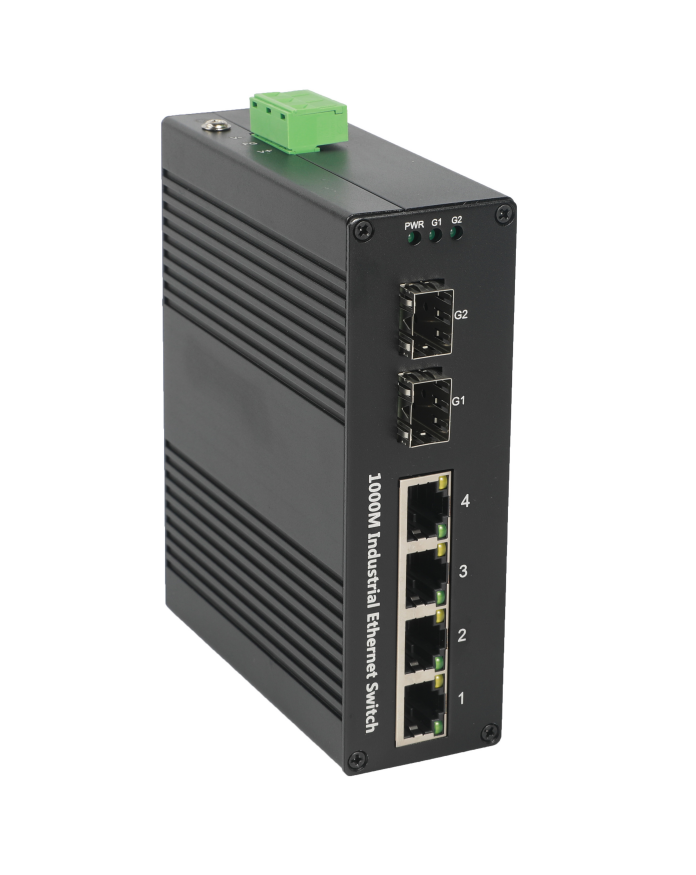
Industry Pain Points
Industrial parks, smart campuses, municipal roads and energy stations suffer from scattered monitoring points, long transmission distances, harsh outdoor conditions and severe electromagnetic interference. Ordinary network cables only cover 100 meters and easily cause video stuttering, frame loss and signal disconnection under electrical interference.
Equipment Application Value
Installable in roadside cabinets, plant poles and outdoor monitoring boxes, the device adopts flexible 1-fiber-multi-electrical networking. A single unit connects multiple cameras and transmits 4K HD video to monitoring centers via fiber.
It applies to factory full-area monitoring, road bayonet, unattended oil & gas station monitoring and park perimeter security. It solves long-distance signal attenuation, EMI and high wiring costs, and guarantees stable transmission of HD video, recording and intelligent alarm data.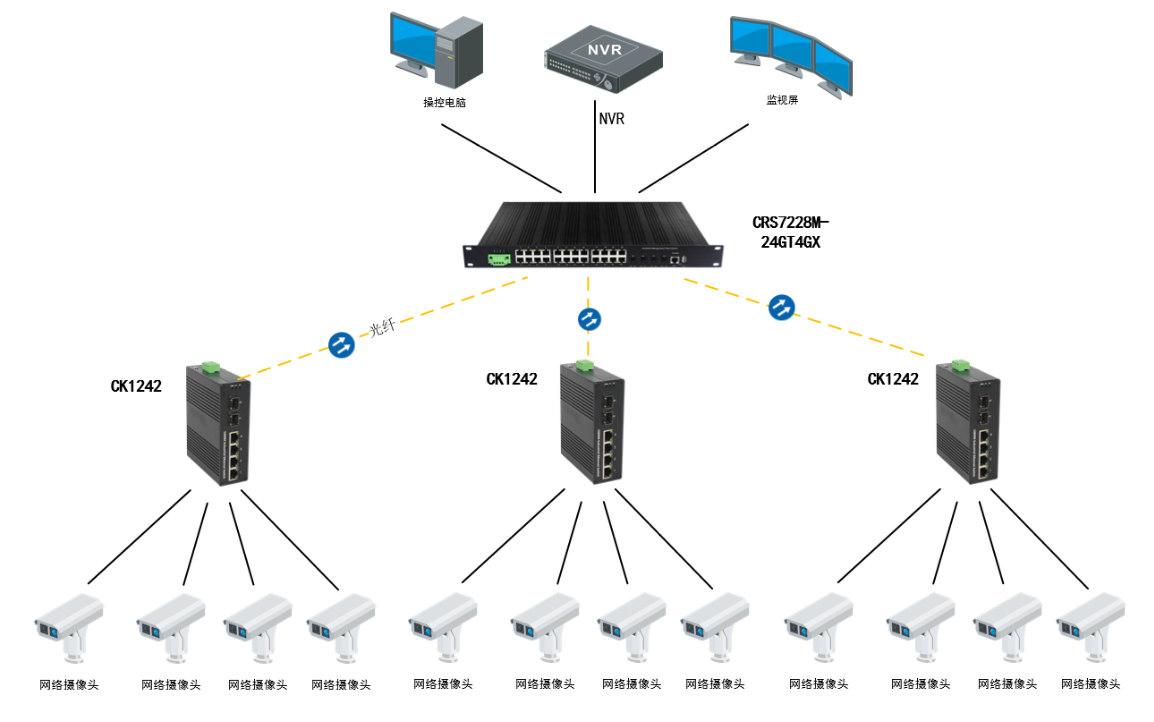
Widely deployed in hundreds of industrial security projects, the device solves three core pain points: poor long-distance transmission, severe EMI and high construction & maintenance costs. Quantitative benefits are listed below:
Eliminate EMI, 99.8% Transmission Stability
Built-in lightning, anti-static and anti-interference hardware shields interference from high-voltage and converter devices. The packet loss rate of video and industrial control data is lower than 0.02%, and network stability rises from 75% (cable networking) to 99.8%, avoiding black screens and data interruption.
42% Lower Total Construction Cost
Long-distance fiber transmission and 1-fiber-multi-electrical structure reduce cable consumption; plug-and-play design shortens construction periods. Compared with cable and traditional switch schemes, the average overall cost of equipment, cables and labor drops by 42%, raising integrators’ profit margins.
65% Higher Commissioning & Maintenance Efficiency
Automatic adaptation removes repeated manual configuration; built-in rapid link fault location pinpoints abnormal spots accurately. Commissioning time is cut by over 60%, while troubleshooting and daily maintenance efficiency rises by 65%, reducing labor input and speeding up project delivery.


